

Cardiorespiratory Care Science
Registered Respiratory Therapist
Faculty:
Dr. Brenda Batts, Prof. Phidomise Leveque, Dr. Devin Sherman, Prof. Chelsea Poindexter
Applications for the fall 2023 group entering the junior level of the B.S. in Cardiorespiratory Care Science degree program will be accepted from January 23 - June 5, 2023. Courses in the major begin each fall semester. For more information, you may contact us at:
Tennessee State University
Department of Respiratory Care & Health Information
Health Sciences Building, Room 315
3500 John A. Merritt Blvd, Box 9527
Nashville, TN 37209-1561
Phone: 615-963-7431 Email: crc@tnstate.edu
Program Goals
The overall goal of the Bachelor of Science degree program with a major in Cardiorespiratory Care Science (CRCS) is to prepare graduates with demonstrated competence in the cognitive (knowledge), psychomotor (skills), and affective (behavior) learning domains of respiratory care practice as performed by registered respiratory therapists (RRTs).
The program strives to prepare leaders for the field of respiratory care by including curricular content that includes objectives related to the acquisition of skills in one or more of the following:
- management,
- education,
- research,
- and advanced clinical practice.
The program is designed as a four-year curriculum plan; students complete pre-professional general education courses during the first two years and advance to the CRCS professional courses during the last two years. Upon completion of the program of study, Tennessee State University awards the Bachelor of Science degree with a major in Cardiorespiratory Care Science.
The field of Respiratory Care needs respiratory care practitioners to:
- administer various treatment modalities/medications,
- perform diagnostic procedures,
- and/or manage sophisticated life-support equipment.
Although the majority of respiratory care practitioners are employed by hospitals, opportunities to practice outside of the standard hospital setting are developing.
Our Graduates
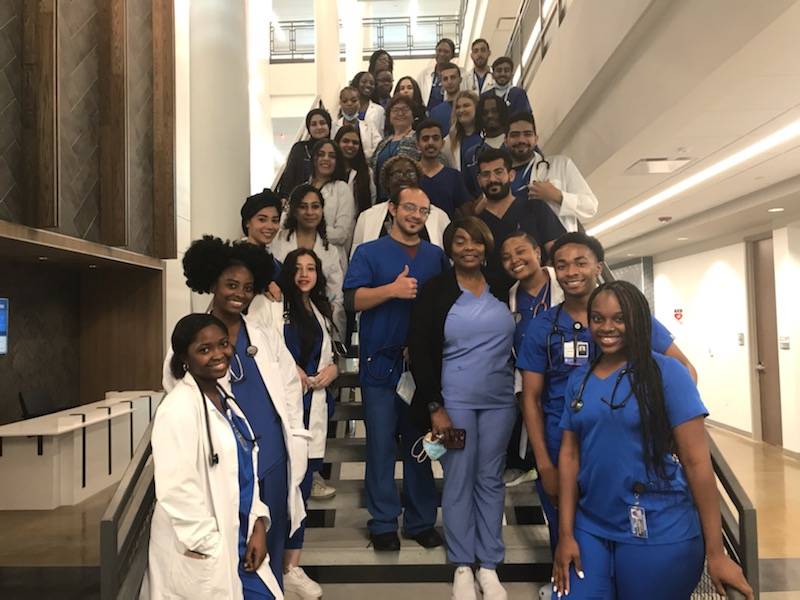
Students receive excellent clinical training in affiliated hospitals. Some of our graduates go on to complete graduate degrees. The demand for respiratory therapy is quite good. The United States Bureau of Labor Statistics indicates that it has a projected growth rate that is to "increase at a faster than average" rate.
What does a job in Respiratory Care Look Like?
The field of Respiratory Care needs practitioners to work in:
- hospitals,
- home care,
- laboratories,
- and sales or business.
In the clinical setting, Respiratory Therapists administer various treatments, medications, perform diagnostic procedures, and/or manage sophisticated life-support equipment. They may be used in areas as diverse as working in intensive care units including premature infants to adults, valuable members of the CPR team, and giving breathing treatments to asthmatics.
Although the majority of respiratory care practitioners are employed by hospitals, opportunities to practice outside of the standard hospital setting are developing. A Bachelor of Science degree is a good foundation and allows the therapist to climb the career ladder.
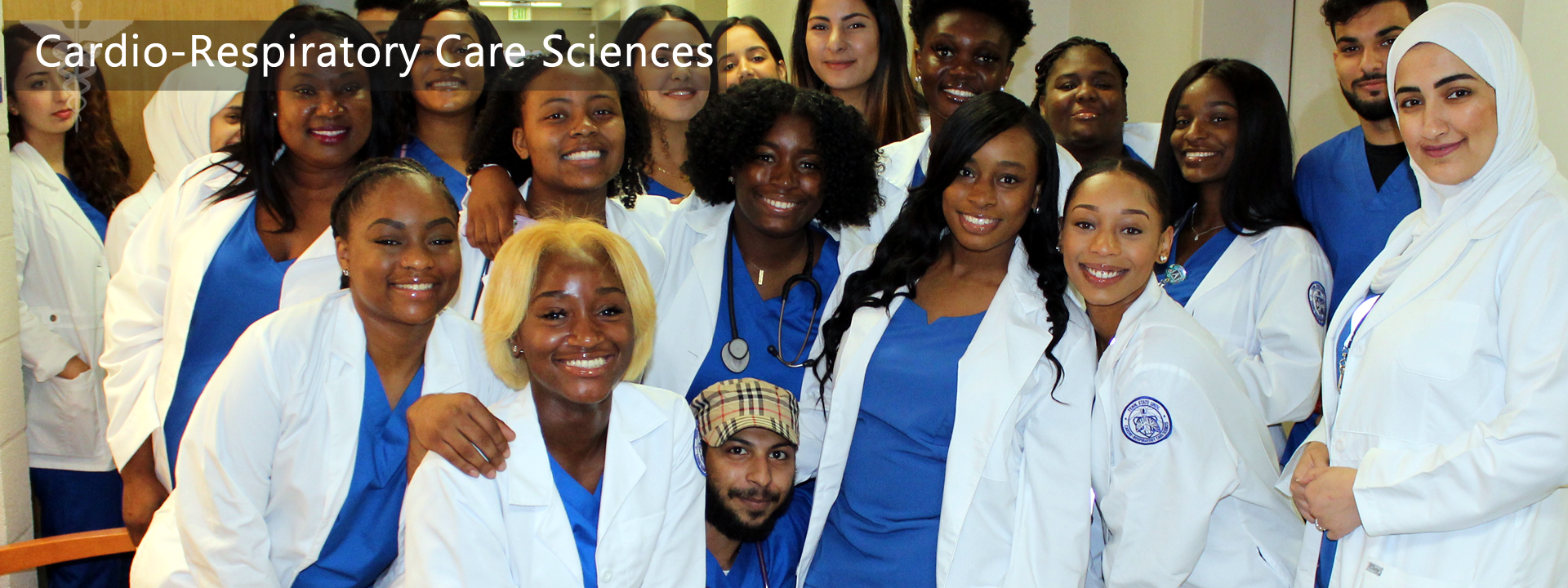
Congratulations to the Cardiorespiratory Care Class of 2023!
We are proud of your accomplishments and know that you are making a difference in the world
– giving the Breath of Life!
Read more about potential job opportunities >>
What classes should I take?
Requirements
View requirements for admission >>
Application package
The program receives applications from January through June each year for those students desiring to enter junior year of the program. View application package >>
Accreditation
Tennessee State University is accredited by the Southern Association of Colleges and Schools Commission on Colleges to award associate, baccalaureate, master's, specialist in education, and doctoral degrees. Degree-granting institutions also may offer credentials such as certificates and diplomas at approved degree levels. Questions about the accreditation of Tennessee State University may be directed in writing to the Southern Association of Colleges and Schools Commission on Colleges at 1866 Southern Lane, Decatur, Georgia 30033-4097, by calling 404-679-4500, or by using information available on SACSCOC's website (www.sacscoc.org).
Tennessee State University Cardiorespiratory Care Science Program number, 200342 awards a B.S. degree in Cardiorespiratory Care Science. The program’s location is at the main campus, 3500 John Merritt Blvd, Nashville, TN. 32079.
Programmatic accreditation for the B.S. in Cardiorespiratory Care Science degree program is through the Commission on Accreditation for Respiratory Care (CoARC); Accredited by the Commission on Accreditation for Respiratory Care (CoARC/www.coarc.com). The program has been placed on Probationary Accreditation as of November 12, 2022.
CoARC accredits respiratory therapy education programs in the United States. To achieve this end, it utilizes an ‘outcomes-based’ process. Programmatic outcomes are performance indicators that reflect the extent to which the educational goals of the program are achieved and by which program effectiveness is documented. For additional information regarding accreditation status, visit https://coarc.com/students/find-an-accredited-program/#. Successful graduates of the program receive a B.S. degree in Cardiorespiratory Care Science and are eligible to take the National Board Examinations.
Student Achievement
Tennessee State University (TSU) utilizes a variety of metrics to measure student success and program quality. These outcomes are available at https://www.tnstate.edu/academic_affairs/achievement-data.aspx.
Graduates of the program are qualified to be respiratory therapists and able to work in a variety of settings. Outcomes reported to CoARC may be viewed at Programmatic Outcomes Data .
Scholarships & Resources for African Americans
https://www.edumed.org/financial-aid/african-american-student-scholarships-resources/
Request Additional Information
Applications for the Fall 2024 group entering the junior level of the B.S. in Cardiorespiratory Care Science degree program will be accepted from January 22 - May 31, 2024. Courses in the major begin each fall semester. For more information, you may contact us at:
Tennessee State University
Department of Respiratory Care & Health Information
Health Sciences Building, Room 315
3500 John A. Merritt Blvd, Box 9527
Nashville, TN 37209-1561
Phone: 615-963-7431 Email: crc@tnstate.edu
Follow us at: