

Fast Facts
All About TSU
 Designated as a "high research" institution by the Carnegie Classification of Institutions of Higher Education, Tennessee State strives for excellence in programming, offerings, and community engagement.
- Comprehensive, urban, coeducational, land-grant university
- Offering undergraduate, graduate, and doctoral degrees - Undergraduate | Graduate
- Designated as a "high research" institution
- Founded in 1912 after its organization in 1909 as the Agricultural and Industrial State Normal School
LOCATION
- Nashville, Tennessee: state capital known as “Music City USA”, “The Athens of the South”, and now, the "It City";
- Nashville: center of government, banking, insurance, publishing, healthcare, transportation, art, culture, and education;
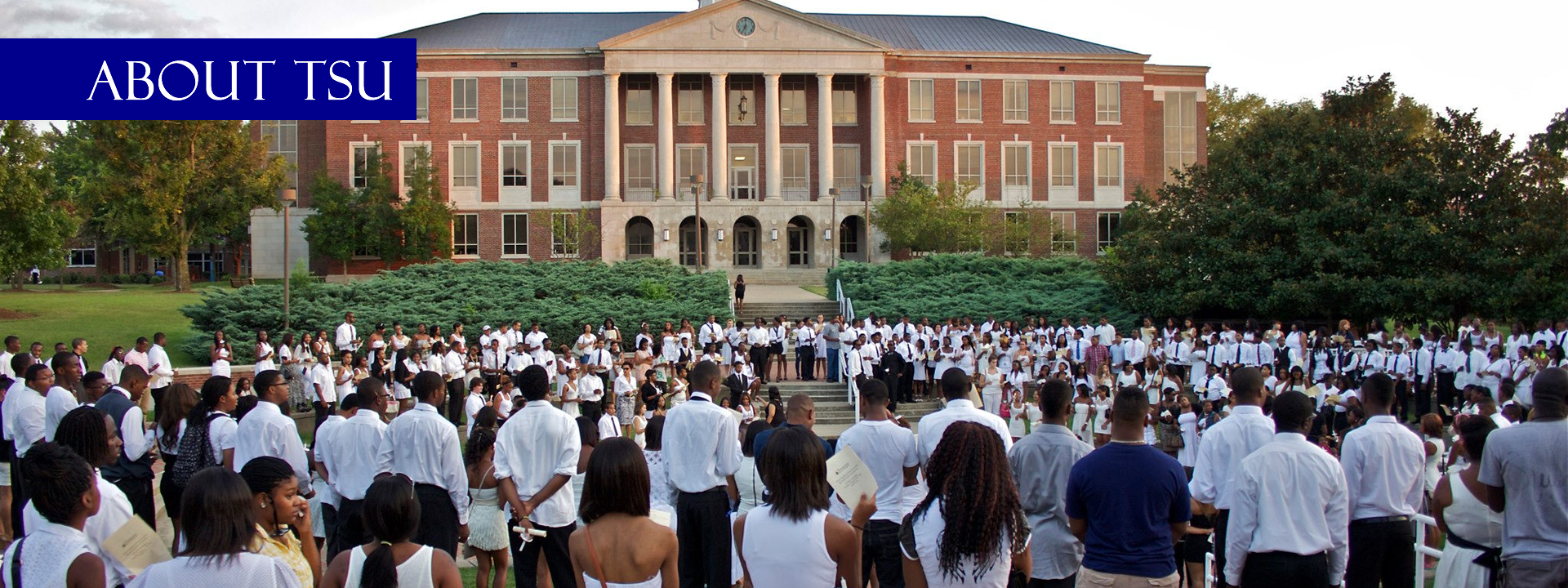
- Beautiful main campus sits on 500 acres near the Cumberland River in a residential neighborhood just 10 minutes northwest of downtown;
- TSU's downtown campus (Avon Williams), is located in the heart of downtown and is within easy walking distance of the central business and government district

ACADEMIC PROGRAMS & FACULTY
View Academic Program Listing >>
400+ full-time academic faculty; student-faculty ratio: 12 to 1

ATHLETICS
NCAA Division I Ohio Valley Conference; men’s basketball, football (Division I-AA), golf, tennis, track and field; women’s basketball, softball, tennis, golf, volleyball, track and field
CAMPUS COMMUNITY
More than 100 student clubs, organizations, club sports and intramural teams; service learning; Student Government association; NPHC fraternities and sororities; Floyd-Payne Campus Center with cafeteria and cafés, bookstore, Kean Hall athletic areas, climbing wall, Wellness Center, student organization offices, meeting rooms and study lounges, 350-seat auditorium; Gentry Center health, physical education, athletic, and convocation complex with 10,000 seat arena, stadium, indoor and outdoor tracks, Olympic-size indoor pool, baseball and softball diamonds, courts for basketball, handball, tennis; academic support services; peer tutors; honors program; Career Development Center; Women’s Center; Leadership TSU; Goodwill Manor alumni house; Brown/Daniel Library with more than 420,000 books, 1,500 microforms, 1,775 periodicals, numerous online databases; vocal and instrumental music, performing arts, Hiram Van Gordon Memorial Gallery, exhibitions, lectures, film and concert series; annual African Street Festival open to the community.
ACCREDITATION
Tennessee State University is accredited by the Southern Association of Colleges and Schools Commission on Colleges.
View accreditation details >>
View associations and accrediting bodies >>

Remember the Tennessee Foxtrot Carousel?Wilma Rudolph, TSU alumna and Olympic champion, was a character on that great piece of Nashville art by artist, Red Grooms! |