Physical Therapy | College of Health Sciences
GENERAL INFORMATIONwELCOME TO PHYSICAL THERAPY
Tennessee State University (TSU) is a comprehensive, urban, coeducational, land-grant university located in the heart of the energetic and creative city of Nashville, Tennessee. TSU’s Doctor of Physical Therapy (DPT) degree is an on campus, 3-year lock step program that begins in the summer semester and completes after nine semesters (graduation occurs in May). We are glad you’ve stopped by our website and hope you will connect with us to learn more.
Here are a few highlights to get you started getting to know us:
-
-
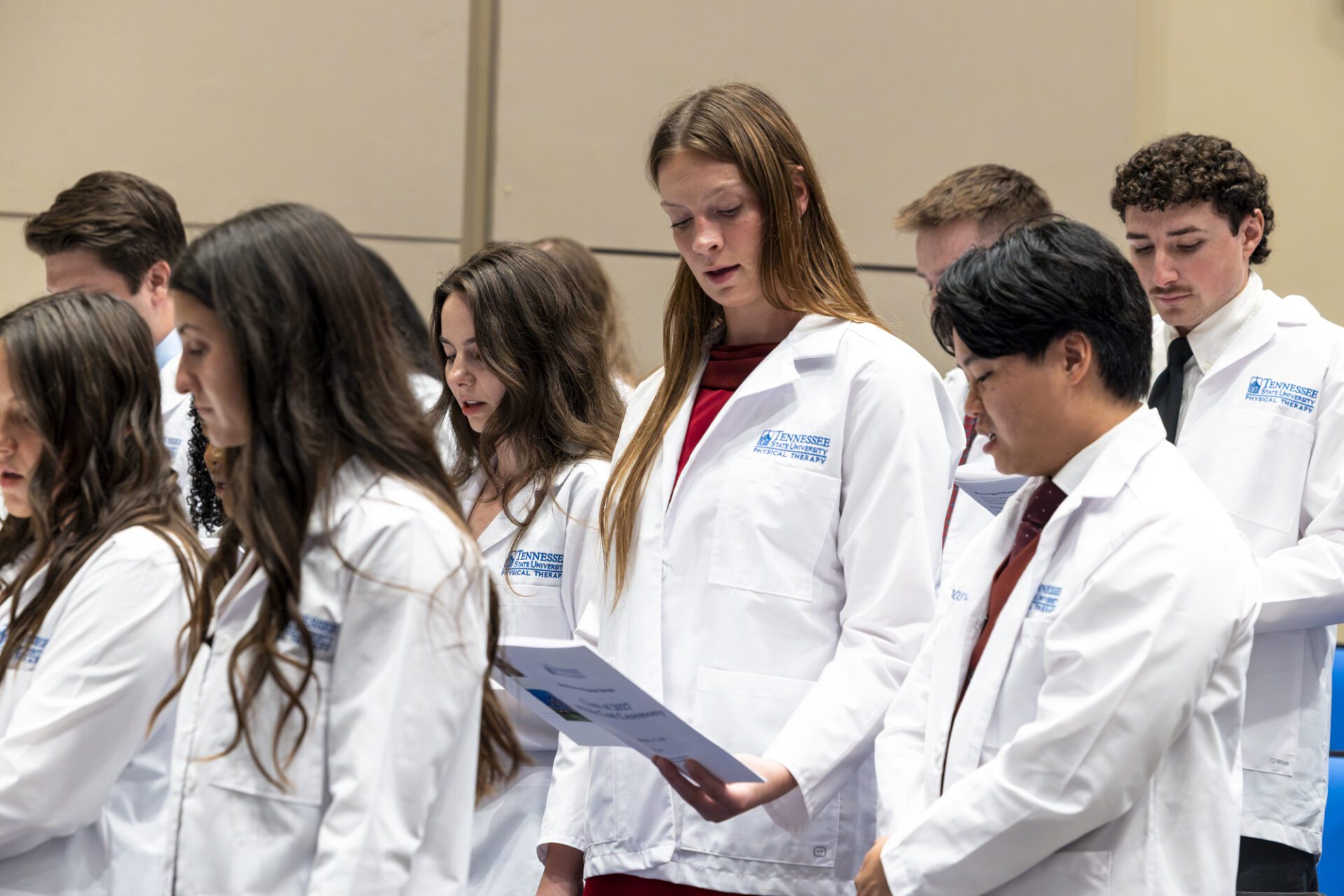
- Class Size – TSU DPT students enjoy a small class size (36 students), close connections between students, faculty, staff and a supportive, collegial, and fun professional culture.
- Cost of the DPT Program – TSU is committed to keeping education as affordable as possible for all students. Tuition and fees for the TSU DPT program are the least expensive in Tennessee and among the lowest among accredited DPT programs. Students have the opportunity to apply for Graduate Assistantships and Work Study positions in the physical therapy department to offset the costs of their education. Check out our Financial Fact Sheet and other information about costs of the DPT program.
- Tiger Community Rehabilitation Clinic – a Pro-Bono, student led clinic located on site in the TSU Department of Physical Therapy. Several DPT courses include applied learning experiences in the Tiger Clinic. The Tiger Clinic is making a difference to the patients we serve and improving clinical skills of our students before they begin full time clinical education experiences.
- TSU Health Sciences Building – TSU Physical Therapy is in the new (2021), Health Sciences Building (HSB) on TSU’s main campus in Nashville. Teaching spaces, technology and equipment reflect the latest trends in health professions education and come together to create an inviting, inspiring space to study, teach and learn.
- Interprofessional Education & Practice – TSU Physical Therapy is one of several departments in the College of Health Sciences (COHS)- Speech Pathology, Occupational Therapy, Nursing, Dental Hygiene, and Public Health. Interprofessionalism occurs routinely in curriculum and extracurricular activities. TSU health professions students participate in annual Interprofessional activities with medical students from Meharry Medical University.
- Our Faculty and Staff – The DPT program is led by a passionate, innovative, highly qualified, and professionally engaged core of 8 faculty members, a part time faculty member, (the esteemed Dean of the COHS, Dr. Ronald Barredo) and a full-time physical therapist Lab Coordinator. Among our faculty are board certified clinical specialists in geriatrics, neurology, orthopedics, sports, and women’s (pelvic) health. Our faculty also hold advanced credentials (certifications, fellowships or graduate degrees) in orthopedic manual physical therapy, pediatric physical therapy, wound care, ergonomics, education, medical anthropology and public health. The majority of our faculty serve the profession in leadership roles at the state and national levels and actively support and encourage student participation in physical therapy professional associations and community service. Please feel free to communicate with our program by accessing our Contact Us page.
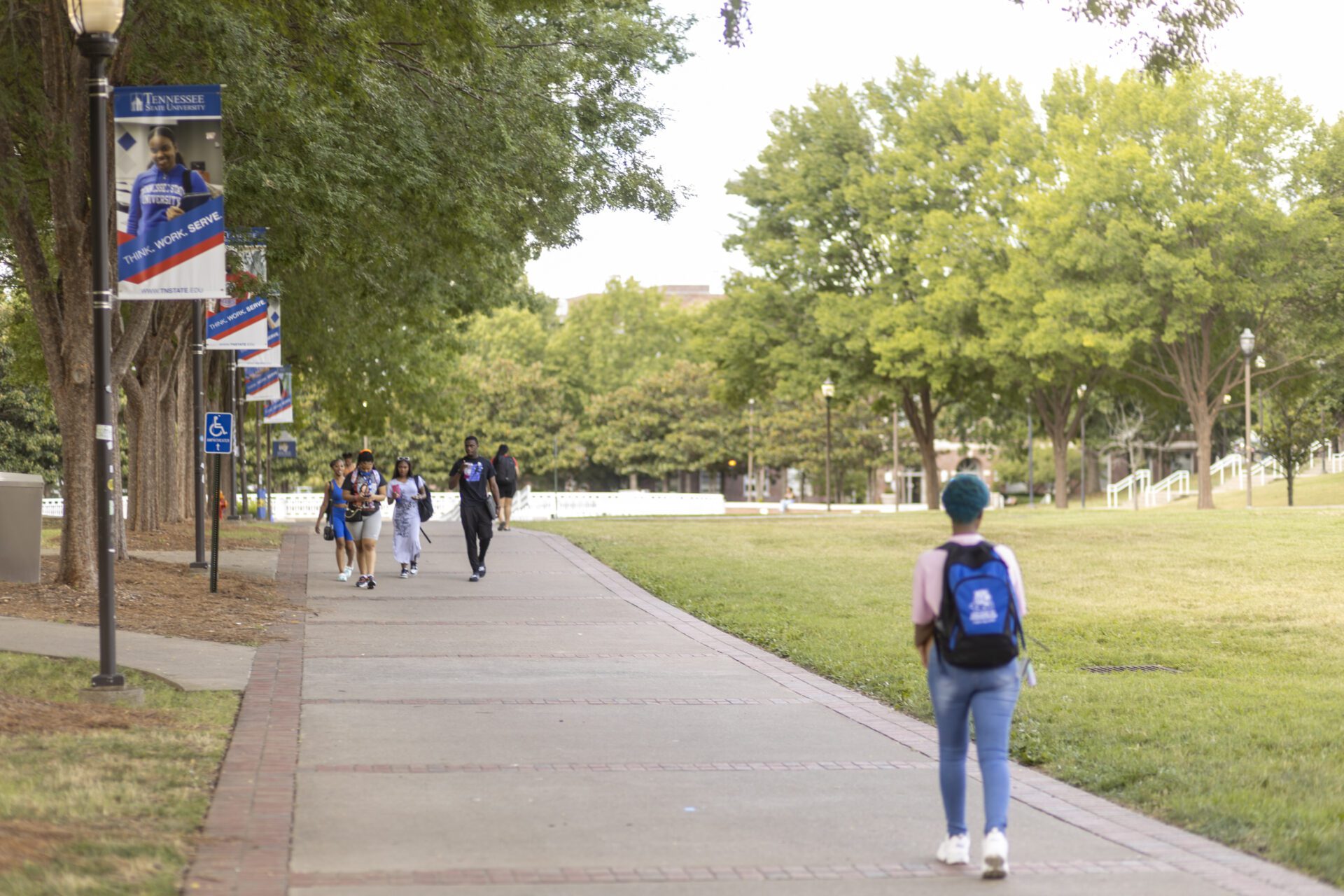
- Our City – Nashville is the state capital of Tennessee also known as “Music City USA”, “The Athens of the South”, and now, the “It City”. Nashville is a center of government, banking, insurance, publishing, healthcare, transportation, art, culture, sports, and education. The Department of Physical Therapy is located on TSU’s beautiful main campus which sits on 500 acres near the Cumberland River in a vibrant residential neighborhood with an expanding restaurant and entertainment scene–all just 10 minutes northwest of downtown Nashville.
- Rich Heritage, Bright Future – Tennessee State University, an HBCE with a rich history, is guided by the motto “Think, Work, Serve.” The TSU Physical Therapy Program reflects this legacy by fostering opportunities for faculty and students to engage in research and service, thereby expanding access to the physical therapy profession. TSU is designated as a “high research” university whose administration and faculty are committed to continuing to elevate research efforts by our faculty and students. TSU’s commitment to elevate research and graduate education is providing the Physical Therapy Department an opportunity to expand its program offerings to include a PhD and graduate certificates that we are working to move forward. We also see in our future the development of residency and fellowship programs associated with the Tiger Clinic.
-
Guiding Documents
Program Philosophy
The DPT program at Tennessee State University recognizes the reciprocal and responsive nature of professional education, where both the learner and the educator collaborate as partners in the learning process. Inherent in the relationship is the primacy of the learner and the facilitative role of the educator as together they embark on a process of professional education.
Statement of Principles
Integral to the educational partnership is the recognition and acknowledgment of the roles, rights, and responsibilities unique to and common between the learner and the educator. The learner is expected to develop and exhibit characteristics of adult learners including, but not limited to, being problem-centered, willing to learn, and being self-directed. The learner is also expected to be a change agent willing to challenge habituated thoughts and practices as physical therapy moves toward the doctoring profession. The educator is expected to uphold high academic standards, respect learner diversity, be role models of professional behavior, and create an environment conducive for effective learning to occur.
Mission
The mission of the Department of Physical Therapy is to graduate competent, entry-level physical therapists who demonstrate cultural competence, apply research evidence to practice, uphold the Code of Ethics, value lifelong learning, and engage in professional/community service.
Goals and Outcomes
Outcome 1: Graduates will possess entry-level competence to practice as physical therapists.
Associated Goals:
- Graduates will pass the National Physical Therapy Examination.
- Graduates will communicate and collaborate effectively and confidently in the healthcare community.
- Graduates will practice in a safe, legal, and ethical manner.
- Graduates will practice autonomously within the scope of practice.
- Graduates will demonstrate competence as a generalist entry-level physical therapist.
Outcome 2: Graduates will demonstrate cultural competence.
Associated Goals:
- Graduates will communicate and collaborate effectively and confidently in the healthcare community.
- Graduates will provide therapy to a diverse population with respect for patient differences.
- Graduates will practice in a safe, legal, and ethical manner.
Outcome 3: Graduates will apply research evidence to practice.
Associated Goals:
- Graduates will use the principles of evidence-based practice.
- Graduates will make decisions related to patient care using reflective critical thinking.
- Graduates will engage in lifelong learning.
Outcome 4: Graduates will uphold the Code of Ethics.
Associated Goals:
- Graduates will practice in a safe, legal, and ethical manner.
- Graduates will practice autonomously within the scope of practice.
- Graduates will serve as compassionate practitioners and patient advocates.
Outcome 5: Graduates will value lifelong learning.
Associated Goals:
- Graduates will make decisions related to patient care using reflective critical thinking.
- Graduates will engage in lifelong learning.
Outcome 6: Graduates will be actively involved in professional/community service.
Associated Goals:
- Graduates will communicate and collaborate effectively and confidently in the healthcare community.
- Graduates will provide therapy to a diverse population with respect for patient differences.
- Graduates will serve as compassionate practitioners and patient advocates.
- Graduates will display leadership and professionalism.
- Graduates will provide community service.
Doctor of Physical Therapy
Curriculum and Professional Licensure: The program has determined that its curriculum meets the state educational requirements for licensure or certification in all states, the District of Colombia, Puerto Rico, and the U.S. Virgin Islands secondary to its accreditation by the Commission on Accreditation in Physical Therapy Education, based on the following:
CAPTE accreditation of a physical therapist or physical therapist assistant program satisfies state educational requirements in all states, the District of Columbia, Puerto Rico, and the U.S. Virgin Islands. Thus, students graduating from CAPTE-accredited physical therapist and physical therapist assistant education programs are eligible to take the National Physical Therapy Examination and apply for licensure in all states, the District of Columbia, Puerto Rico, and the U.S. Virgin Islands. For more information regarding state qualifications and licensure requirements, refer to the Federation of State Boards of Physical Therapy website.
YEAR I
Summer Session – 9 credits
PHTH 5360 Gross Anatomy (6)
PHTH 5380 Introduction to Physical Therapy (1)
PHTH 5330 Psychosocial Behavioral Issues (2)
Fall Semester – 15 credits
PHTH 5421 Tests and Measurements (2)
PHTH 5470 Applied Physiology (3)
PHTH 5480 Biomechanics and Movement Science (5)
PHTH 5440 Human Development Across the Life Span (2)
PHTH 5450 Patient Care Principles (2)
PHTH 5590 Research I (1)
Spring Semester – 15 credits
PHTH 5490 Pathology (3)
PHTH 5545 Clinical Pharmacology for Physical Therapists I (2)
PHTH 5550 Therapeutic Exercise (3)
PHTH 5570 Neuroscience/Neuropathology (3)
PHTH 5580 Biophysical Agents for Patient Management (4)
YEAR II
Summer Semester – 9 credits
PHTH 6345 Integumentary Therapeutics (2)
PHTH 6330 Clinical Medicine for Physical Therapists (3)
PHTH 6335 Diagnostic Imaging in PT Practice (2)
PHTH 6365 Introduction to Clinical Internships (1)
PHTH 6390 Research II (1)
Fall Semester – 15 credits
PHTH 6420 Principles of Education (2)
PHTH 6440 Cardiopulmonary (3)
PHTH 6460 Orthopedics I (4)
PHTH 6470 Neurological PT I (4)
PHTH 6490 Research III (2)
Spring Semester – 15 credits
PHTH 6550 Cardiopulmonary II (1)
PHTH 6540 Prosthetics and Orthotics (3)
PHTH 6560 Orthopedics II (4)
PHTH 6510 Neurological PT II (2)
PHTH 6580 Pediatrics (3)
PHTH 6590 Research IV (2)
YEAR III
Summer Semester – 9 credits
PHTH 7320 Administration & Management (2)
PHTH 7355 Clinical Internship I (4)
PHTH 7360 Advanced Clinical Topics I (2)
PHTH 7370 Ethical Behavior and Moral Reasoning (1)
Fall Semester – 14 credits
PHTH 7410 Clinical Integration Seminar (2)
PHTH 7420 Seminar in Geriatrics (1)
PHTH 7430 Special Topics in Physical Therapy (1)
PHTH 7455 Clinical Internship II (6)
PHTH 7460 Advanced Clinical Topics II (2)
PHTH 7480 Health and Wellness (1)
PHTH 7490 Research V (1)
Spring Semester – 13 credits
PHTH 7555 Clinical Internship III (5)
PHTH 7565 Clinical Internship IV (5)
PHTH 7570 DPT Clinical Case Conference (2)
PHTH 7580 DPT Professional Issues (1)
The previous DPT curriculum for the class of 2022 is available here.
The 2026-2027 Department of Physical Therapy Student Handbook may be accessed here: Student Handbook.
The course descriptions for the current list of courses outlined above may be accessed from the Graduate Catalog.
Program Accreditation
The Doctor of Physical Therapy program at Tennessee State University is accredited by the Commission on Accreditation in Physical Therapy Education (CAPTE), 3030 Potomac Ave., Suite 100, Alexandria, Virginia 22305-3085; telephone: (703) 706-3245; email: accreditation@apta.org; website: http://www.capteonline.org. If needing to contact the program directly, please call (615) 963-5881 or email pking5@tnstate.edu.
Institutional Accreditation
Tennessee State University is accredited by the Southern Association of Colleges and Schools Commission on Colleges to award associate, baccalaureate, master’s, specialist in education, and doctoral degrees. Degree-granting institutions also may offer credentials such as certificates and diplomas at approved degree levels. Questions about the accreditation of Tennessee State University may be directd in writing to the Southern Association of Colleges and Schools Commision on Colleges at 1866 Southern Lane, Decatur, Georgia 30033-4097, by calling 404-679-4500, or by using information available on SACSOC’s website (www.sacscoc.org)
Graduation, Licensure, & Employment Rates
GRADUATION RATE
Average graduation rate of 95.5% for the previous two graduating classes (2024 – 100%, 2025 – 91%).
LICENSURE EXAM PASS RATE
Average first time pass rate of 95% on the National Physical Therapy Exam for the previous two graduating classes (2024 – 100%, 2025 – 90%)
Average ultimate pass rate of 96.65% on the National Physical Therapy Exam for the previous two graduation classes (2024 – 100%, 2025 – 93.3%)
For more detailed information about graduation rate and licensure exam pass rate, please click here.
EMPLOYMENT
100% of those who graduated in 2024 and 2025 and sought employment were employed in physical therapy (full-time or part-time) within one year of graduation.
Welcome Clinical Instructors!

Clinical education is an integral part of the physical therapy program at Tennessee State University. Our clinical instructors serve as our eyes and ears as students enter their clinical practicum.
Information about the clinical education component of our program may be obtained from our Clinical Education Manual.
Department of Physical Therapy
Tennessee is a member of the National Council for State Authorization (NC-SARA); Tennessee State University is an approved SARA institution. In order to provide students with the breadth and depth of clinical experiences, the physical therapy program offers a variety of clinical education sites in NC-SARA member states, and has contracts with international sites. However not all states are members of NC-SARA. Currently, the program does not send students to California. A list of clinical sites may be accessed here.
We hope you will reach out to learn more about the TSU DPT program. Dr. Kwaku Kankam, PT, DPT, EdD is the chair or our admissions committee and is available to answer questions. Dr. Kankam can be reached at ptadmissions@tnstate.edu or by phone at (615) 963-2190 (8:00 a.m.- 4:30 p.m. Central Time).
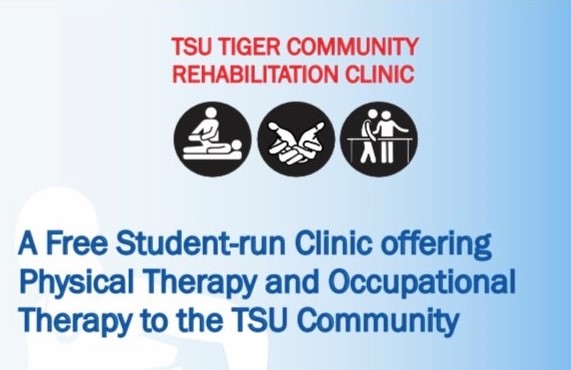
For more information regarding the student-Run Pro Bono Clinic, link to the website: https://www.tnstate.edu/tcrc/
